
Dutch hydrogen expertise
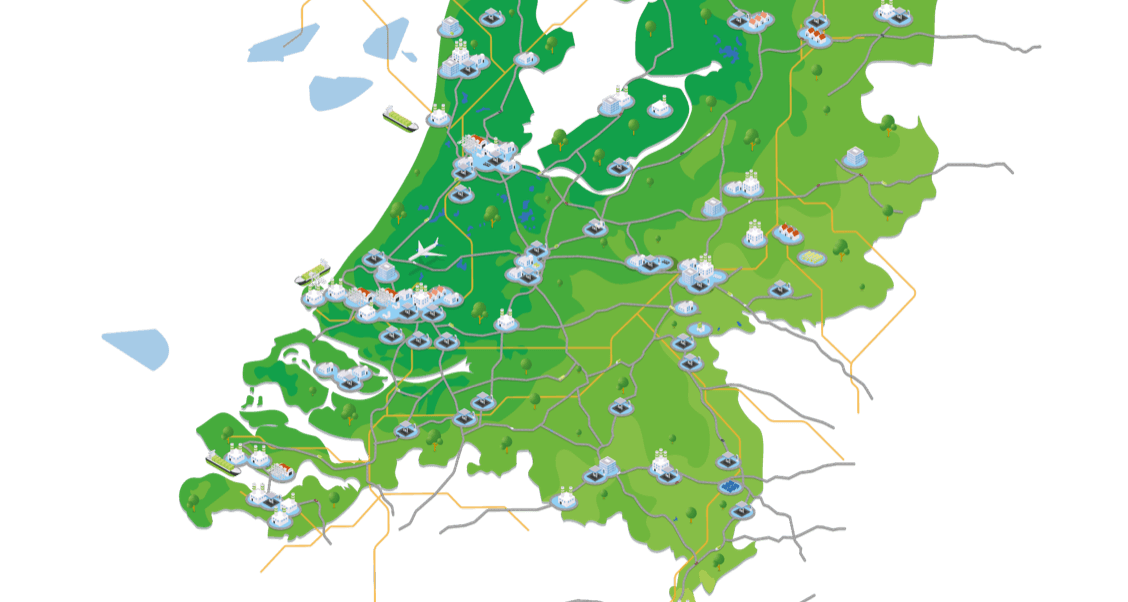
This is the interactive tool of the NL hydrogen guide, which features ambitious Dutch companies and flagship projects ready to drive the European and global hydrogen market forward.
272 / 272 Organizations


Rotterdam is the largest energy hub in Europe and is a frontrunner in the energy transition. Hydrogen is a key element in this transition. Together with its partners, the Port of Rotterdam is working on a series of projects to develop the production, use, infrastructure, import and transit of hydrogen for both blue and green hydrogen. Regarding green hydrogen, several companies are making plans to ensure that an electrolysis capacity of 500 MW will be operational by 2028. This capacity could according to announced plans be scaled up to 2 GW by 2032, among other things by realising 2 GW of additional wind at sea, connected to Rotterdam. For the exchange of hydrogen between companies, there will be a hydrogen pipeline through the port area in 2026, where the construction of the national hydrogen backbone starts. This is a boost for the development of a physical hydrogen market, and so is the realisation of a hydrogen exchange.
Together with a large number of partners, the Port of Rotterdam is examining the import and transit of hydrogen from overseas, to replace the current European fossil energy imports (like oil, coal). This is done with parties from many countries, ranging from Iceland to Australia and from the Middle East to South America. To be able to accommodate these imports, the focus is on realising terminal facilities in Rotterdam and a robust infrastructure to the hinterland, especially hydrogen pipelines to Chemelot and North Rhine-Westphalia. Simultaneously, the application of hydrogen is encouraged, as fuel for industry and the transport sector, and as raw material for chemical products. Current projects include one that is aimed at having 1,000 hydrogen-powered trucks on the road.

This is the interactive tool of the NL hydrogen guide, which features ambitious Dutch companies and flagship projects ready to drive the European and global hydrogen market forward.
272 / 272 Organizations